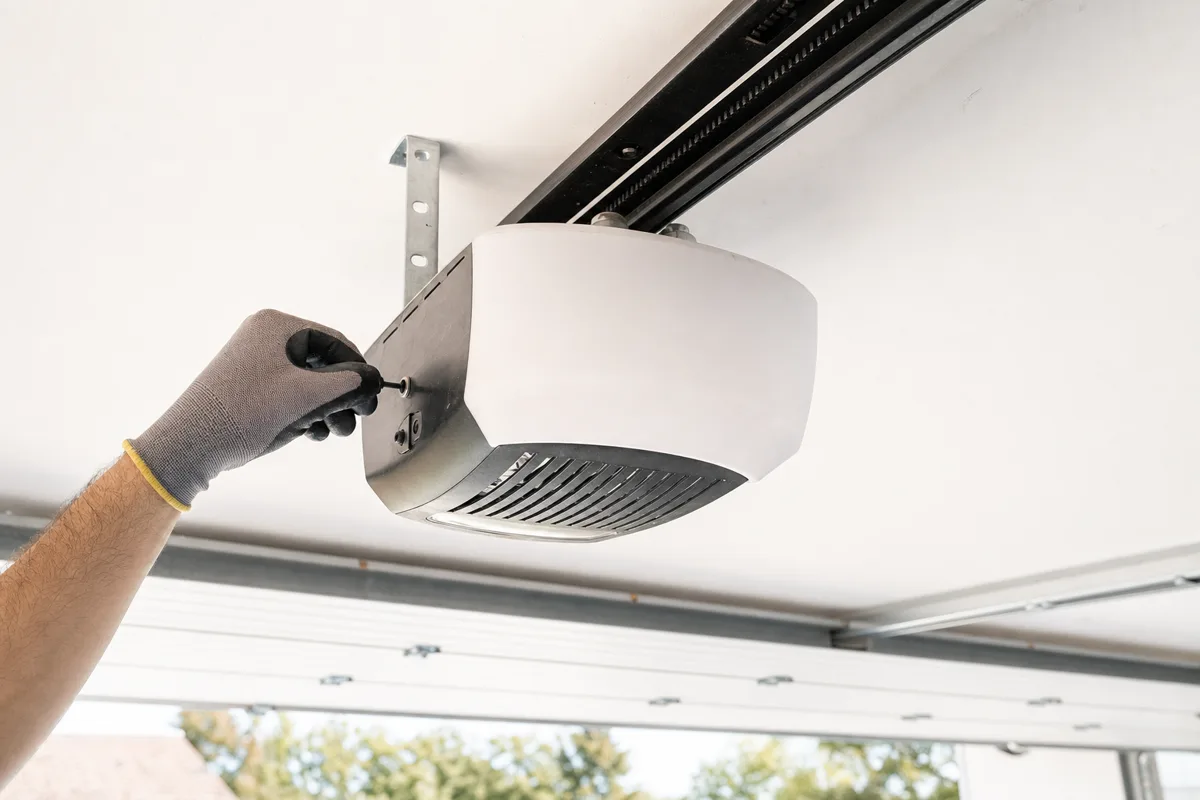

Garage Door Opener Repair
Fault-finding on operators that hum, stall, reverse, or ignore their remotes.
View serviceA door that opens but refuses to close is usually the safety system doing its job, not a broken motor. Work through the checks in order and you will usually find the reason in the first few minutes.
Clear the threshold and the beam path, then clean both photo-eye lenses and check their indicator lights. A broken or misaligned beam tells the operator to reverse. If the beam is fine and the door still refuses, look for ice at the seal, a seized roller, a bent track or a close limit set past the floor. Do not raise the force setting to force it down: that removes the operator's ability to tell an obstruction from normal effort.
Almost every operator built in the last three decades has a photo-eye beam across the bottom of the opening and a force monitor watching how hard the motor is working. Either will stop a close and send the door back up. That is why the sequence matters: check the things designed to stop the door before you start suspecting the things designed to move it. A blocked or misaligned beam, a stone under the seal, an ice ridge at the threshold or a limit setting that drifted will account for the large majority of these calls. What is left after that is genuine mechanical resistance, and that is worth identifying rather than overpowering.
Start at the top. The early checks are the most common causes and need no tools.
Move bins, tools, bags, leaves and packed snow away from the doorway, and run your eye along the whole bottom seal for a stone, a curled mat or a ridge of ice. Make one closing attempt after the path is clear and note the exact point at which the door stops or reverses.
What it means: A normal close after clearing points to a simple obstruction rather than a fault.
The two sensors sit within a few inches of the floor on either side of the opening. Wipe both lenses with a dry cloth, since condensation, frost, dust and cobwebs are all enough to break the beam. Then compare their indicator lights: most units show one steady light on each side when the beam is intact.
What it means: A flickering or dark indicator means the beam is broken or the sensors are out of line.
A knocked bracket is the usual reason a beam goes out of alignment. Move one sensor by very small amounts until the indicators read as they should, then tighten its bracket. Keep both sensors low across the opening; raising them out of the way defeats the protection they exist to provide.
What it means: If small adjustments restore steady lights and the door closes, alignment was the fault.
In Whitby winters, meltwater that refreezes at the threshold is a common cause of a door that starts down and reverses. Look for a bond between the bottom seal and the slab, and for ice in the tracks near the floor. Do not force the door: forcing it tears the seal and can pull the bottom bracket.
What it means: Ice at the seal or in the lower track is a thaw-and-clear job, not an operator fault.
With the door fully closed, pull the manual release and lift the door by hand. It should feel manageable and run smoothly, and should roughly hold position at waist height. Binding, grinding or a door that fights you means the resistance is mechanical and the operator was reading it correctly.
What it means: A heavy or binding door by hand needs balance, roller or track work rather than opener settings.
Stop if a spring shows a visible gap in its coils, if a cable is slack or hanging, if the door sits crooked in the opening, or if the door is heavy by hand. Do not disable, bypass or raise the photo eyes to make the door close, and do not increase the force setting to push through resistance. Do not pull the manual release on a door that is part-way open with a suspected broken spring. Keep people and vehicles clear and send the details through the form.
This is a seasonal complaint in Whitby. Durham Region's climate work puts the baseline at about 80 days a year when temperatures cross the freezing point, using Whitby as the regional proxy location, and the nearest official station records a January mean of -4.8 C and about 105.8 cm of snow a year. Meltwater at the threshold that refreezes overnight, and frost on photo-eye lenses in an unheated garage, together account for a large share of midwinter calls about doors that will not close, particularly on the detached and rural garages north of Taunton Road.
Fault-finding on operators that hum, stall, reverse, or ignore their remotes.
View service
Seized rollers renewed, bent rails straightened, derailed doors re-railed and squared.
View service
Fast attention for doors stuck open, jammed part-way, or hanging out of square.
View serviceFill out the form and we'll confirm your appointment by email.
These guides are written for Whitby homes. If the fix is beyond a homeowner check, we work everywhere inside this area.
Map data © Google. Pin shows the service area, not a walk-in location — all work is done at your home.
A real callout, not stock imagery.
A sectional door pulled off its tracks, taken down and supported on site so it could be checked and re-hung safely — photographed on the job.